

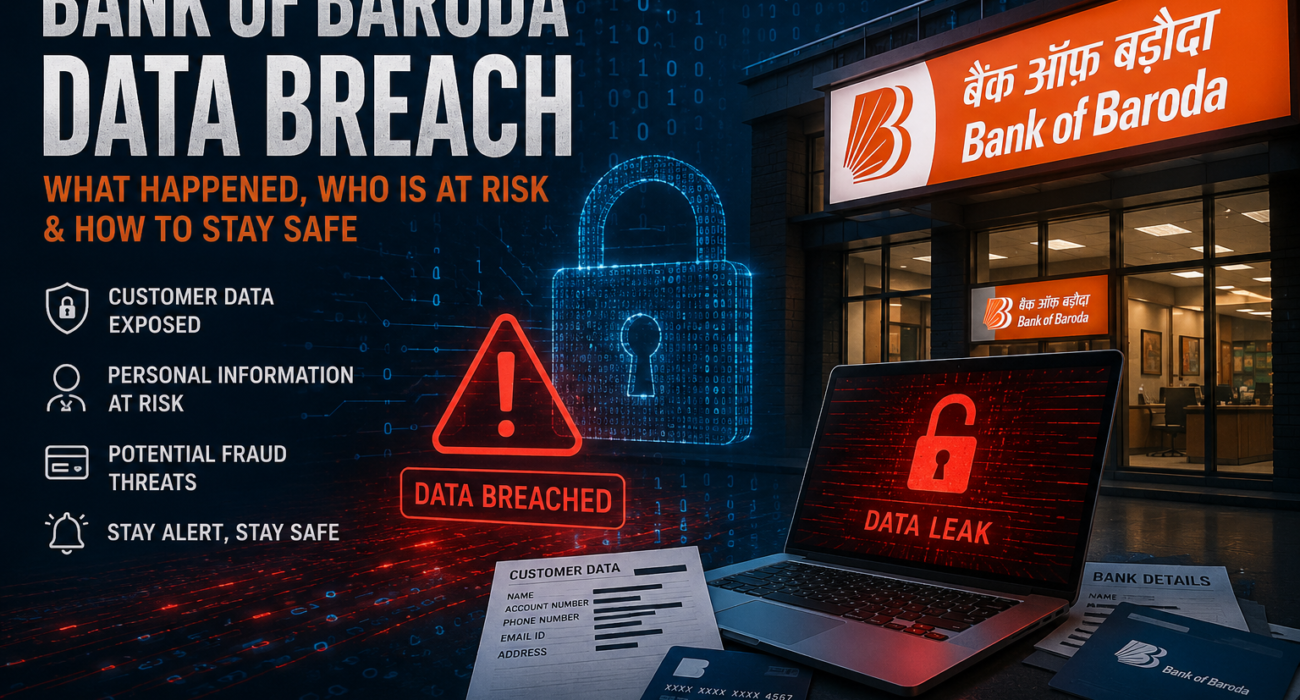
Bank of Baroda Data Breach 2026: Everything You Need to Know
India’s banking sector has undergone a massive digital transformation over the last decade. While online banking, mobile applications, and digital payment systems have made financial transactions easier than ever, they have also increased the attack surface for cybercriminals.
Recently, Bank of Baroda (BoB), one of India’s largest public sector banks, confirmed a cybersecurity incident after reports emerged that a large amount of customer-related information had been exposed online. The incident quickly became one of the most discussed cybersecurity events in India’s banking industry.
This article explains what happened, the potential risks, what Bank of Baroda has officially stated, and how customers can protect themselves against cyber threats.
About Bank of Baroda
Founded on 20 July 1908 by Maharaja Sayajirao Gaekwad III, Bank of Baroda has grown into one of India’s largest public sector banks. Today, it serves over 183 million customers across multiple countries and provides retail, corporate, MSME, agricultural, and international banking services.
Its digital ecosystem includes:
- Internet Banking
- bob World Mobile Banking
- UPI Services
- Corporate Banking
- Credit Cards
- NRI Banking
- Digital Loan Services
- Investment and Insurance Products
The increasing adoption of digital banking has made cybersecurity a critical priority for financial institutions.
What Happened?
During the last week of July 2026, cybersecurity researchers reported that a threat actor had allegedly published a large volume of Bank of Baroda-related data on the dark web.
Initial reports suggested that the leaked dataset could include:
- Customer account information
- Personal identification documents
- Loan-related records
- Internal banking documents
- Branch-related information
- Corporate banking records
- Customer support documents
Reports estimated the leaked archive to be more than 700 GB, with some media outlets reporting that it could approach 1 TB.
What Did Bank of Baroda Say?
Bank of Baroda officially acknowledged that the incident resulted from a compromised employee email account.
According to the bank:
- Core Banking Systems were not compromised.
- Customer transactions continue to remain operational.
- A forensic investigation has been initiated.
- Relevant authorities have been informed.
- The bank has activated its cybersecurity response procedures.
The bank also filed a claim under its cyber insurance policy while the investigation continues.
Was Money Stolen from Customer Accounts?
As of now, there is no official confirmation that customer bank accounts were directly compromised through the incident.
However, cybersecurity experts warn that exposed personal information can be misused for:
- Identity theft
- Phishing emails
- Fake banking calls
- Social engineering attacks
- Loan fraud
- Account takeover attempts
- SIM swap attacks
This means that while your money may not be immediately at risk, criminals could attempt to deceive customers into revealing OTPs, passwords, or UPI PINs using leaked information.
Why Email Compromise Is a Serious Cybersecurity Risk
Many organisations focus heavily on securing servers and databases but overlook employee email security.
A compromised corporate email can provide attackers with access to:
- Internal documents
- Customer communications
- Financial reports
- Identity documents
- Password reset emails
- Confidential attachments
This is why modern cybersecurity strategies place strong emphasis on:
- Multi-Factor Authentication (MFA)
- Email threat protection
- Zero Trust Architecture
- Security awareness training
- Phishing simulations
- Endpoint Detection and Response (EDR)
Common Banking Scams After a Data Breach
Cybercriminals often exploit publicised breaches to launch targeted scams.
Be cautious of:
Fake KYC Verification Calls
Fraudsters may claim your KYC needs updating and request personal information.
Fake Customer Support
Attackers impersonate bank representatives and ask for OTPs or passwords.
Phishing Emails
Emails may appear to come from the bank and contain malicious links.
Fake Banking Apps
Cybercriminals distribute counterfeit apps that steal login credentials.
QR Code Scams
Victims are tricked into scanning malicious QR codes that authorise payments.
How Bank of Baroda Customers Can Stay Safe
If you are a Bank of Baroda customer, consider taking the following precautions:
- Change your Internet Banking password.
- Update your Mobile Banking password.
- Enable transaction alerts.
- Regularly monitor your account activity.
- Never share OTPs, PINs, passwords, or CVV numbers.
- Avoid clicking links received through SMS or email.
- Download banking apps only from official app stores.
- Report suspicious activity immediately.
Experts also recommend reviewing your account statements frequently over the coming weeks.
The Growing Cybersecurity Challenge for Banks
The banking industry has become one of the primary targets for cybercriminals.
Modern threats include:
- Ransomware
- Credential theft
- Insider threats
- API attacks
- Business Email Compromise (BEC)
- AI-powered phishing
- Supply chain attacks
- Malware targeting financial institutions
Research indicates that phishing and malware remain among the most common attack vectors against digital banking platforms, highlighting the need for strong authentication, encryption, and real-time fraud detection.
What Businesses Can Learn from This Incident
Regardless of industry, organisations should view this incident as a reminder to strengthen cybersecurity practices.
Key recommendations include:
- Implement Multi-Factor Authentication across all accounts.
- Conduct regular vulnerability assessments.
- Perform penetration testing.
- Deploy advanced email security solutions.
- Encrypt sensitive customer information.
- Monitor networks continuously.
- Train employees to recognise phishing attempts.
- Maintain tested incident response and disaster recovery plans.
Cybersecurity is no longer optional—it is a core business requirement.
Final Thoughts
The Bank of Baroda cybersecurity incident serves as a reminder that even large and well-established financial institutions face evolving cyber threats.
While the bank has stated that its core banking systems remain secure, the reported exposure of customer-related information highlights the importance of robust email security, continuous monitoring, and customer awareness.
For customers, staying vigilant is the best defence. Verify communications through official channels, avoid sharing sensitive credentials, and promptly report any suspicious activity. As digital banking continues to evolve, cybersecurity awareness remains essential for both financial institutions and their customers.